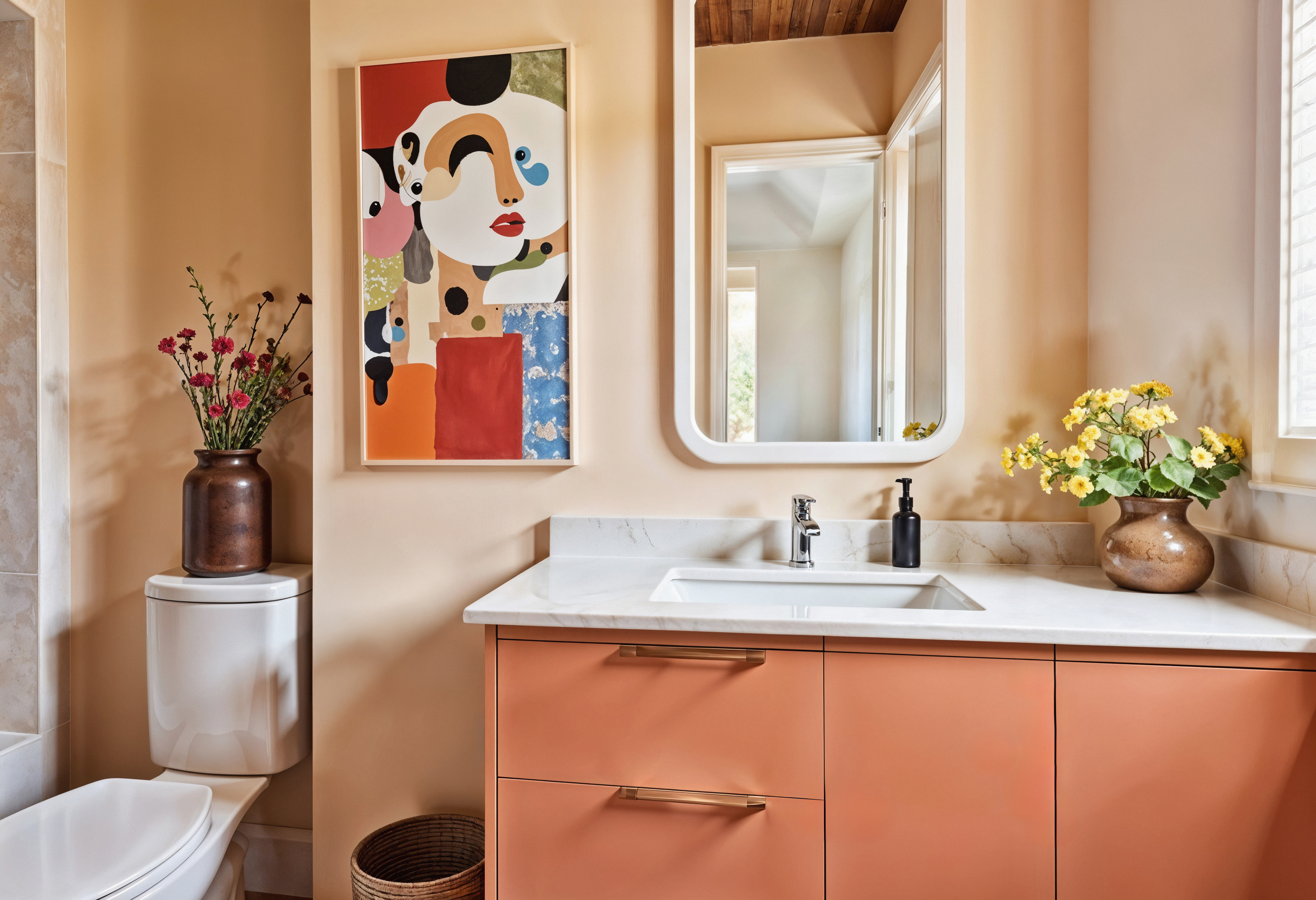
Bathroom Cabinet Paint Colors: Best Shades for Any Style
Bathroom Cabinet Paint Colors: Timeless & Trending Options
Choosing the perfect paint color for your bathroom cabinets, particularly the vanity, is one of the quickest ways to update the entire space. Unlike kitchen cabinets, bathroom vanities are smaller focal points, making them ideal candidates for bold colors, while still needing to work harmoniously with existing fixtures and the room’s lighting.
How to Choose a Bathroom Cabinet Color
The decision process involves assessing the physical constraints of your room and the fixed elements already in place.
Bathroom Size, Natural Light, and Undertones

Matching Countertops, Tile, and Hardware Finishes
The vanity color should act as the bridge between your permanent fixtures.
Countertops: Your cabinet color should contrast enough with the countertop material (e.g., dark cabinet with white quartz, or light cabinet with dark granite). If the counter is heavily patterned, opt for a solid, neutral cabinet color to prevent visual clutter.
Tile: If your floor or shower tile is busy, choose a simple, neutral cabinet color. If the tile is monochromatic, you have more freedom to use a saturated cabinet color like navy or sage.
Hardware Finishes: Ensure the cabinet color complements your metals.
Warm Tones (Brass, Gold, Copper): Pair beautifully with deep, saturated colors (navy, emerald) and warm whites/greiges.
Cool Tones (Chrome, Brushed Nickel): Ideal partners for cool grays, bright whites, and icy blues.
Black/Oil-Rubbed Bronze: Highly versatile; works with nearly any cabinet color, providing sharp contrast.
Timeless Cabinet Colors for Bathrooms
These colors offer enduring style and maintain high resale value, making them safe, yet sophisticated choices.
Clean Whites and Soft Off-Whites
The perennial classic, white is ideal for maximizing perceived space and light.
Clean White: A pure, bright white is perfect for modern or transitional bathrooms, providing a crisp, gallery-like feel. It offers the maximum contrast against dark floors or brightly colored walls.
Soft Off-Whites: These whites have a touch of gray, beige, or yellow to warm them up. They are best for a classic or traditional look, as they feel less stark and pair more easily with beige or cream-colored stones and tiles.
Light Grays and Greige
These neutrals offer depth without the commitment of a bolder color.
Light Gray: Gray brings an immediate sense of sophistication. Light, silvery grays are excellent for coordinating with marble or porcelain tiles that have cool, blue-ish undertones.
Greige (Gray-Beige): This versatile neutral shifts between warm beige and cool gray depending on the light. It is the perfect choice for bathrooms with mixed metal finishes or those aiming for a farmhouse or rustic-modern aesthetic.
Natural Wood Tones (Painted “Wood Look” Alternatives)
While not paint in the traditional sense, achieving a natural finish via staining or, in some cases, painting with specialized techniques is timeless. If your cabinet material is less-than-perfect wood, consider a faux-stain technique using gel stains or sheer washes to mimic high-end finishes like walnut or rift-sawn oak, which are very popular in contemporary design.
Trending Bathroom Cabinet Color Ideas
For those looking to make a statement, these colors are dominating contemporary bathroom design, offering personality and a boutique feel.
Navy and Deep Blue Vanities
Navy blue is the most popular trend in bathroom vanities.
Why it Works: It is highly saturated, providing a dramatic anchor in the room, yet it’s considered a "neutral" blue because it coordinates effortlessly with both warm brass and cool chrome hardware.
Style Match: Excellent for coastal, nautical, and Transitional styles.
Sage and Muted Green Cabinets
Drawing on nature, greens bring a calming, spa-like quality to the bathroom.
Sage Green: A dusty, muted green with gray undertones is elegant and sophisticated. It looks stunning when paired with white stone countertops and light, creamy walls.
Deep Forest Green: A richer color that works well in a larger bathroom or one with high ceilings, creating a moodier, luxurious ambiance.
Black and Charcoal for Modern Contrast
Black vanities are the ultimate modern statement piece, providing powerful contrast.
The Effect: Black grounds the space and makes all other elements—especially white countertops, mirrors, and lighting—pop.
Best Use: Use charcoal (a very dark gray) if true black feels too heavy. Black is best suited for contemporary, minimalist, or industrial-style bathrooms.
Pro Tips for a “Custom” Look
Elevate your painted cabinets beyond a simple DIY finish with these design techniques.
Two-Tone Bathrooms (Upper Light, Lower Darker)
While less common in bathrooms than kitchens, a subtle two-tone approach can add visual interest.
Application: In a bathroom with both an upper linen tower and a lower vanity, paint the upper cabinetry in a light, neutral color (e.g., a bright white) and the lower vanity in a rich, saturated color (e.g., deep blue). This grounds the vanity while keeping the upper visual plane airy.
Best Sheens for Color Depth and Cleanability
The sheen dictates how durable and easy-to-clean the finish is, which is crucial in a moist environment.
Satin or Semi-Gloss: These are the ideal sheens for bathroom cabinets.
Satin: Provides a subtle, eggshell-like depth that hides minor imperfections better than higher sheens.
Semi-Gloss: More reflective and easier to wipe clean, offering the best resistance to soap scum and condensation. Avoid flat or matte sheens, as they quickly absorb moisture and stains.
Sample Testing Under Real Bathroom Lighting
Never choose a color from a small chip at the store. Lighting dramatically changes a paint color's appearance.
Buy a Sample: Purchase a small sample pot of your top three colors.
Apply to a Large Board: Paint a large poster board or piece of scrap wood with the samples.
Test in Place: Place the sample boards against the vanity frames and doors. View the colors at different times of the day—under natural light, during the evening with artificial light, and with the vanity light on. This ensures the color looks exactly as you expect.
FAQs
What cabinet color makes a bathroom look bigger?
Bright, clean white makes a bathroom look the biggest. Lighter colors reflect the available light, pushing the boundaries of the walls and cabinetry and creating a perception of greater space. Pale pastels or very light grays achieve a similar effect without being pure white.
Are dark bathroom cabinets hard to maintain?
Dark cabinets (black, navy, deep gray) are actually quite low maintenance for general spills, but they tend to show dust, water spots, and fingerprints more prominently than medium or light colors. A smooth, semi-gloss finish is essential for dark colors, as the reflectivity makes it easy to wipe away water spots.
Should bathroom cabinets match the wall color?
No, they generally should not match exactly. Cabinets should typically contrast with the wall color to create definition and visual interest. If you want a monochromatic look, choose a cabinet color that is several shades lighter or darker than the wall, or vary the sheen (e.g., matte wall paint with semi-gloss cabinet paint of the same color) for subtle separation.
Ready to Find Your Perfect Hue?
Visit your local hardware or paint store today to pick up color samples and start your transformation! For the highest quality cabinet enamel and superior durability against humidity, explore specialized paint lines designed for trim and cabinetry.
