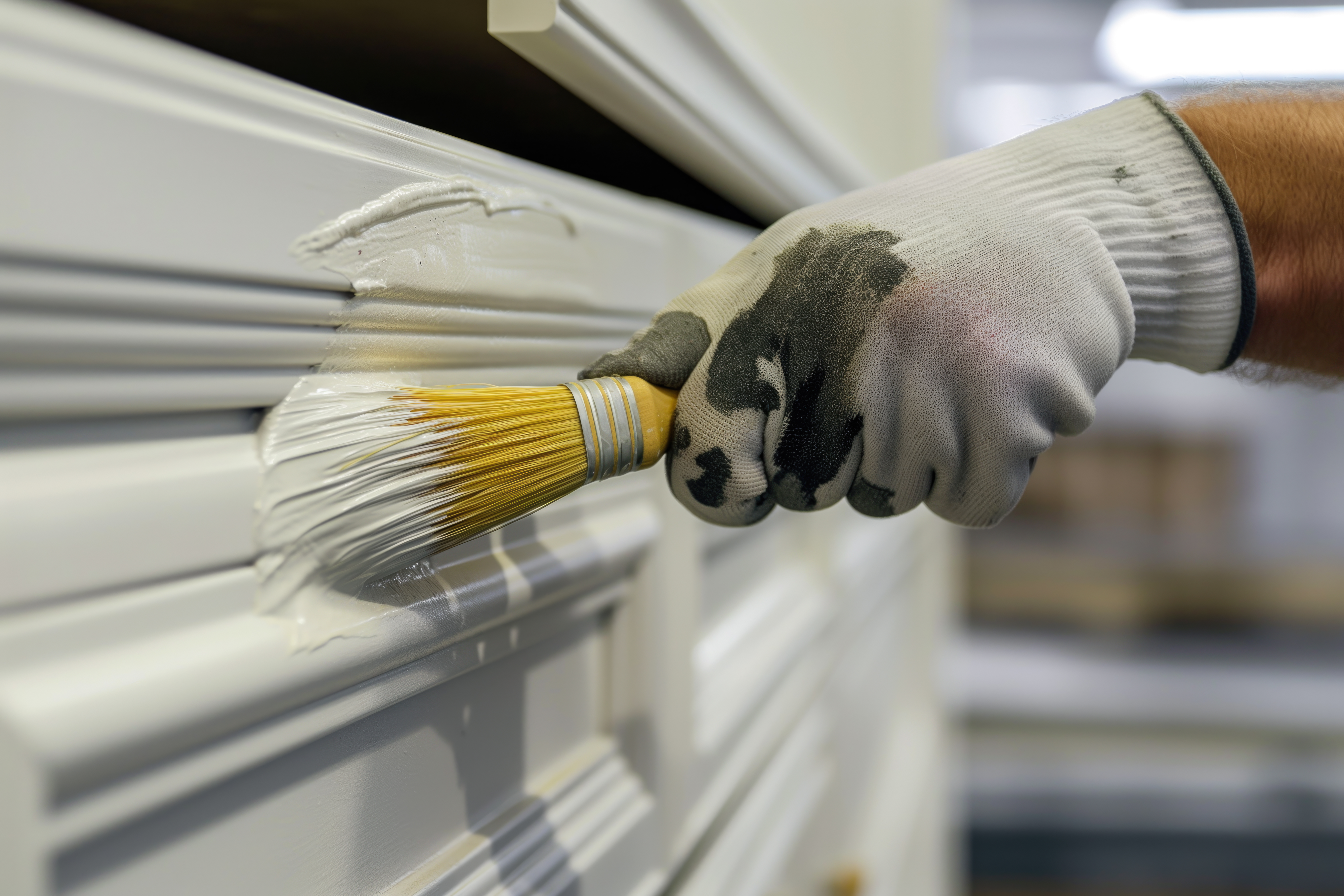
How to Paint Bathroom Cabinets: A Pro Step-by-Step Guide
Painting bathroom cabinets is a rewarding project that can dramatically transform your space. However, due to the high humidity and constant condensation in this room, a durable, professional finish relies 90% on preparation and 10% on the final paint application. Follow this guide to ensure your cabinets look fantastic and resist peeling for years.
Step 1: Identify the Cabinet Material
The single most critical step that dictates your entire prep process is knowing what your cabinets are made of. This knowledge determines the type of primer required to achieve proper adhesion.
Wood vs Veneer vs MDF vs Laminate/Thermofoil
Material Type
Characteristics
Key Prep Concern
Solid Wood/Plywood
Visible grain, sturdy construction.
Tannin bleed-through and potential knots/stains.
Wood Veneer
Thin layer of real wood glued onto a substrate.
Requires care not to sand through the veneer layer.
MDF (Medium-Density Fiberboard)
Extremely smooth, heavy, prone to swelling if exposed to moisture.
Edges and joints are very porous and must be fully sealed with primer to prevent swelling.
Laminate/Thermofoil
Non-porous, slick plastic or vinyl coating over MDF.
Requires specialized high-adhesion primer; standard primer will peel immediately.
Why Material Changes Your Prep Plan
Wood: Requires a stain-blocking primer (often shellac-based or oil-based) to seal tannins and wood knots.
MDF: Requires heavy focus on sealing cut edges and seams with primer, as exposed fiberboard acts like a sponge for moisture.
Laminate/Thermofoil: Requires a dedicated bonding primer (e.g., Urethane or Modified Acrylic) specifically formulated for slick, glossy, non-porous surfaces.
Step 2: Prep for Adhesion
Surface preparation ensures the cabinet doors are clean, dull, and ready for the primer to bond permanently. Skip or rush this step, and the paint will fail.
Remove Hardware and Label Doors
Before any cleaning or sanding begins, disassemble everything.
Remove Doors and Drawers: Take all cabinet doors and drawer fronts off the frames.
Remove Hardware: Remove all hinges, handles, and knobs. Place them in a secure container or bag (or clean/polish them now if reusing).
Label: Use masking tape and a marker to label the inside of the doors (e.g., "U1" for Upper Cabinet 1, "L2" for Lower Cabinet 2) and the corresponding spots on the cabinet frames. This ensures effortless reinstallation.
Clean Soap Film and Oils
Bathroom cabinets are covered in layers of invisible residue that must be removed.
The Problem: Hairspray, residual soap scum, body oils, and cosmetics create a barrier that paint cannot adhere to.
The Solution: Wipe down all surfaces (doors, drawers, frames) with a degreaser solution. Trisodium Phosphate (TSP) substitute is excellent. Follow with a clean rinse of plain water to remove any chemical residue. Ensure the cabinets are completely dry before proceeding.
Sand or Degloss (When Each Is Best)
Sanding (Best Overall): Lightly sanding with 180 to 220-grit sandpaper creates a physical "tooth" for the primer to grab onto. This is essential for previously finished wood or varnished surfaces. Sand until the gloss is dull, but do not sand through the finish or veneer.
Deglossing (For Complex Moldings): Liquid deglossers can be used on surfaces with intricate carvings or details that are difficult to reach with sandpaper. While deglossers work, a physical sanding creates superior adhesion and is generally preferred for flat panels.
Step 3: Prime the Right Way
Primer is the specialized adhesive layer between the old cabinet surface and the new topcoat.
Bonding Primer for Slick Surfaces
If you have laminate, thermofoil, or factory-finished cabinets (which are typically ultra-slick), you must use a bonding primer.
Function: Bonding primers contain special resins that chemically adhere to non-porous materials. They dry very quickly, allowing you to proceed faster.
Application Tip: Apply in thin, even coats. Two light coats of primer are always better than one thick coat, as thick primer can sag or peel.
Stain-Blocking Primer When Needed
If your cabinets are unfinished wood, knotty pine, or have visible water stains or smoke damage, choose a stain-blocking primer.
Function: These primers—often Shellac-based or Oil/Alkyd-based—create an impenetrable seal that traps tannins, stains, and odors, preventing them from bleeding through the final paint color.
Ventilation Warning: If using a shellac or oil-based primer, ensure maximum ventilation. Wear a high-quality respirator mask, as the fumes are intense.
Light Sanding Between Coats for Smoothness
To achieve a factory-smooth finish, you must sand between every single coat of product, starting with the primer.
Sand Primer: Once the primer is fully dry (check the product label), use a very fine-grit sanding sponge or 320-grit sandpaper.
Technique: Sand lightly—the goal is simply to remove any small dust nibs, brush hairs, or irregularities from the first coat.
Clean: Wipe away all sanding dust with a microfiber tack cloth before applying the next coat (be it primer or paint).
Step 4: Paint + Cure for Durability
Choose a high-quality acrylic-alkyd hybrid or cabinet enamel (as discussed in the previous guide) for your topcoat. Durability is achieved through proper application and patience during the cure phase.
Brush/Roller vs Sprayer
Method
Finish Quality
Effort / Setup
Brush/Roller
Excellent, especially if using self-leveling paint (look for a mini foam cabinet roller).
Low setup, easily contained, requires attention to detail to avoid brush marks.
Sprayer
Flawless, factory-smooth finish.
High setup time (extensive masking/ventilation required), steep learning curve.
Pro Tip for Brushing: If using a brush and roller, thin your paint slightly with a paint conditioner (according to the manufacturer's directions) to help the paint flow and self-level, minimizing visible brush strokes. Apply two to three thin coats for the best result.
Dry Time vs Cure Time (When You Can Use the Bathroom Again)
This distinction is crucial in a high-humidity environment:
Dry Time (2-4 hours): The paint is dry to the touch and can accept another coat.
Cure Time (7-30 days): The paint has achieved its maximum hardness and water resistance.
You can gently reassemble and use the cabinets after the paint is dry (typically 24-48 hours after the final coat), but avoid hard scrubbing, harsh chemicals, or forcefully closing the doors for the first 30 days to allow the enamel to fully cure and harden. This patience ensures a durable, long-lasting finish that resists humidity and sticking.
FAQs
Can you paint bathroom cabinets in place?
It is strongly discouraged. While you can paint the frames in place (after taping off the walls, counters, and floors), you must remove the doors and drawers and paint them laid flat. Painting doors vertically almost guarantees drips, runs, and inconsistent coverage. Furthermore, you cannot properly paint the area behind the door hinges if the doors are left on.
How long does cabinet paint take to fully cure?
The industry standard for most quality acrylic and hybrid cabinet enamels to reach full chemical cure is 30 days. While they are safe to use gently after a few days, the film will be soft and susceptible to permanent damage (scratches, dents, or chemical etching) until the 30-day mark.
What if my cabinets are peeling already?
If your existing finish is already peeling, you must first address the cause, which is usually poor adhesion or moisture intrusion.
Remove all loose and flaking paint using a scraper or coarse sandpaper.
Sand the edges where the old paint meets the substrate until the transition is smooth.
Apply a high-quality bonding or shellac primer over the exposed substrate and the transition area to ensure everything is sealed and adheres properly before applying the topcoats.
Need a Professional Finish?
Ensure your bathroom remodel is done right the first time. If you'd prefer to skip the lengthy prep work and guarantee a factory-smooth, humidity-resistant finish, call your local professional home finishing service for a free estimate today!
